
Yonkers Resident Lookup Records at a Glance
A careful name search separates the role shown by a record from a claim of residence. A parcel layer can identify a property and its owner or mailing field. A court search can identify a party to a case. A probate index can indicate that an estate file exists. Each result needs a date, a jurisdiction, and a second source that fits the same person and period. The city, county, court, and state routes are separate custodians, so the best first search depends on the fact already known.
| Record | What It Can Confirm | Official Keeper | Access Route |
|---|---|---|---|
| Parcel and assessment data | A property reference, SBL or print key, and published owner or mailing categories | City of Yonkers Assessment Department | City Property Finder and annual-roll routes |
| Recorded land instrument | Dated grantor, grantee, and legal-description clues | Westchester County Clerk | Records Online or Land Records counter |
| Civil or criminal court index | A case reference, party search result, or future appearance within portal scope | New York Unified Court System | eCourts and the relevant clerk |
| Estate or will finding aid | Whether an Archives record or probate file may exist | Westchester Archives or Surrogate's Court | WebSurrogate and the Archives index |
| Qualified vital record | A certified or genealogy copy only when statutory eligibility is met | Yonkers City Clerk or NYSDOH | City genealogy request or state route |
Begin with the narrowest reliable fact. A current address question belongs with a parcel reference and later County Clerk instrument, while an estate question belongs with the Surrogate route. A historic household lead may begin in a dated library directory, then require a newspaper, map, deed, or census source for corroboration. None of these categories is a complete list of people living in Yonkers.
Start a Yonkers Resident Lookup With a Dated Fact
Use a source chain rather than a single hit. Write down the spelling searched, the source date, the jurisdiction, and any record or case number. Compare full names, initials, time period, parties, and a parcel description where relevant. A shared city name or abbreviated initial is not enough to merge two people. The County parcel layer distinguishes situs fields from owner-mail fields, so even an accurate map result does not identify everyone at an address.
- Choose one known fact, such as a name plus date, a city address, a case number, or an estate file reference.
- Use the official custodian for that record type and preserve the query terms, access date, and result reference.
- Match the result against a second independent source that fits the same time and place.
- When legal weight matters, ask the Clerk, court, or vital-record custodian for the public-copy procedure instead of relying on an index screen.
- Record uncertainty. A result can be late, incomplete, sealed, protected, misspelled, or outside the portal's scope.
For an older residence association, the Riverfront holdings can supply a dated directory entry, but they are on-site reference material and have real gaps. The historic collection is discussed in more detail in the Yonkers city directory.
Note: A no-result can reflect a source limit, not proof that a person was absent from Yonkers.
Check Yonkers Court Records by Name
Yonkers City Court handles local civil claims up to $15,000, misdemeanors, lesser offenses, and felony arraignments. Its civil matters can be approached through WebCivil Local, which offers index-number, party-name, attorney-name, judge-name, party-role, court, filing-year, status, future-appearance, and HTML or PDF choices. Use a party name with the court when possible, or use an exact index number. The research did not capture the portal's dropdown contents or a sample result screen, so a name search should not promise any particular case type or result column.
The Yonkers City Court page is the source for the court's local contact and calendar information.
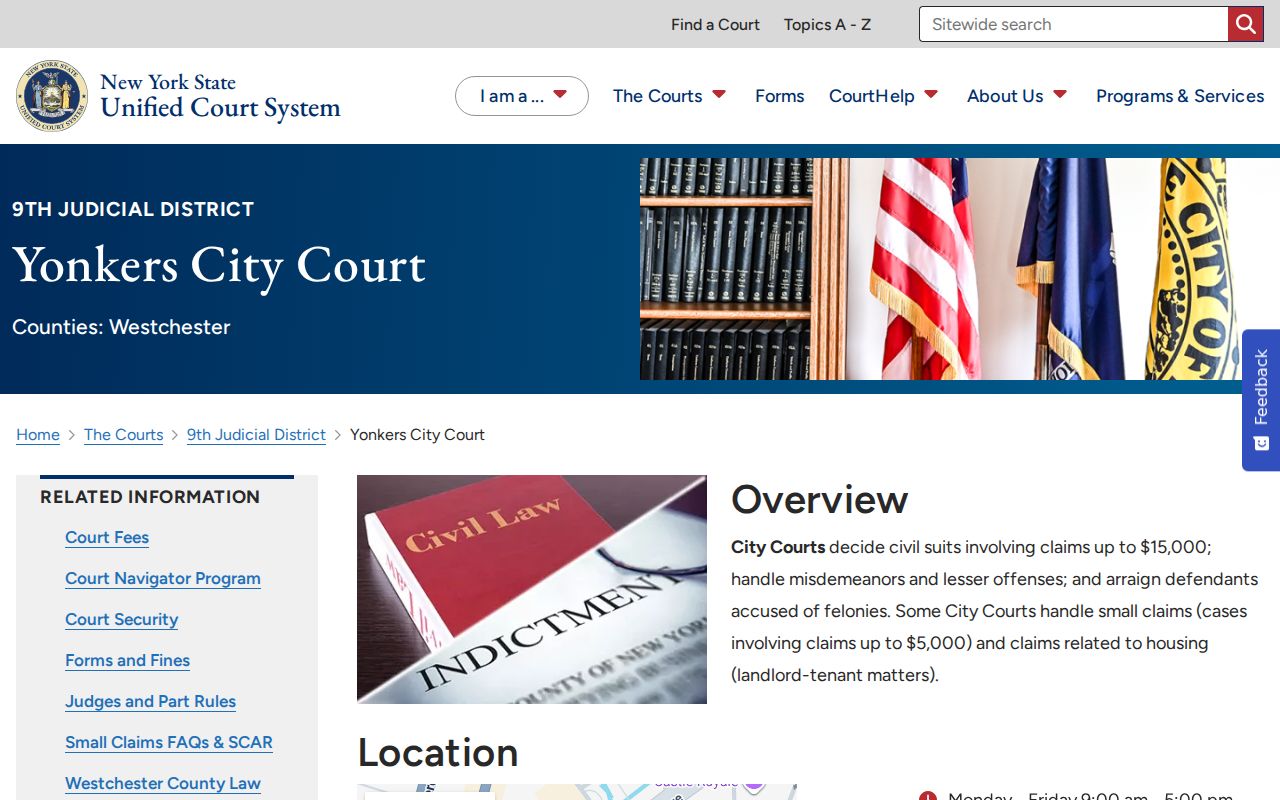
The court page helps place a local court search in the correct jurisdiction, but the clerk and court rules control access to the operative file. Court records are not obtained through ordinary FOIL.
For estate research, WebSurrogate offers party or name, file number, old-index, index-book, and will-search modes. A party search can be narrowed by date of death. Unrestricted document links are limited to documents filed on or after February 19, 2014; older unrestricted documents may require a public-access computer, and restricted material remains unavailable. The Westchester Archives Surrogate Records Index is a separate finding aid with last-name, first-name, or year modes and alphabetical browsing.
Why Yonkers Records Need Two Sources
A record's label matters. A deed is a dated transfer, not a guarantee of present ownership or contact. A property map can show a parcel owner and mailing category, not every occupant. A directory is a dated publication, not proof of identity. Court and probate portals have their own date and confidentiality limits. Comparing two independent records is the practical way to reduce same-name errors without stretching either record beyond what it says.
- Docket
- A court's running case record. It helps identify a matter and its filings, but it is not a biography of a party.
- Index and image
- An index points to a record. An image is a view of the underlying document when the custodian makes one available.
- Certified copy
- A custodian-issued copy with the legal certification required when an ordinary portal result is not enough.
- Situs address
- The location of a parcel. It differs from an owner's mailing address and does not name all occupants.
Evidence boundary. Treat an owner, mailing recipient, court party, licensee, and resident as different roles until independent dated records support a narrower conclusion.
Use Yonkers Resident Records for Qualified Events
Vital records are confidential, and FOIL does not create a shortcut to them. For a birth certificate, Yonkers limits certified copies to the person named, a listed parent, or a person with direct and tangible interest and required proof. The city publishes mail, in-person, and authorized online channels. For a qualifying historical event, its genealogy route uses the New York thresholds: a birth at least 75 years old with the person known deceased, a death at least 50 years old, or a marriage at least 50 years old with both spouses known deceased. A direct-line descendant may document a relationship for a waiver request.
The Yonkers birth certificate instructions describe the city request channels and identity requirements.
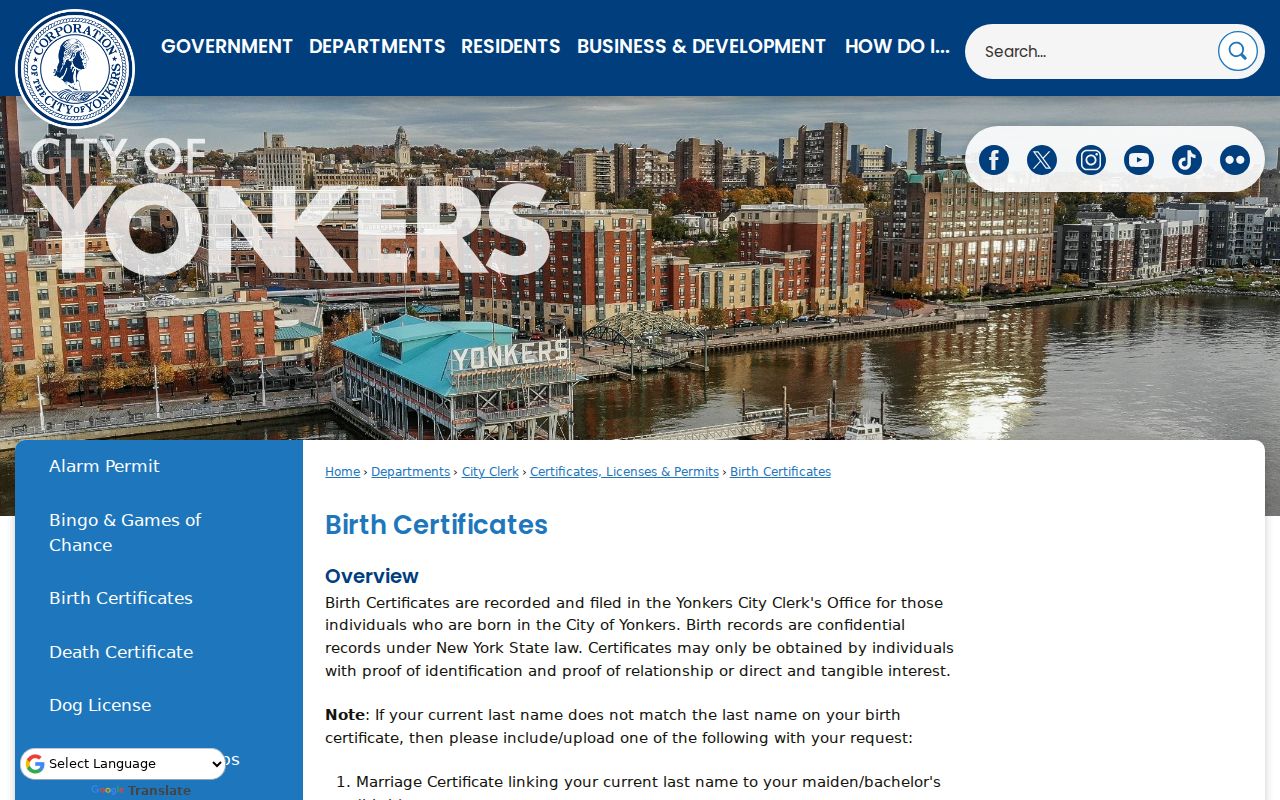
A request produces the requested record when eligibility is met or a notice that no record was found. It does not turn a vital office into a general name-search service.
For genealogy work, the New York State genealogy instructions identify an important local exception: the state does not file Yonkers birth, death, and marriage events before January 1, 1914. Start with the Yonkers City Clerk or Local Registrar for those older city events. City genealogy staff conduct the qualifying search after a written, paid request, and the resulting material is marked for genealogy only.
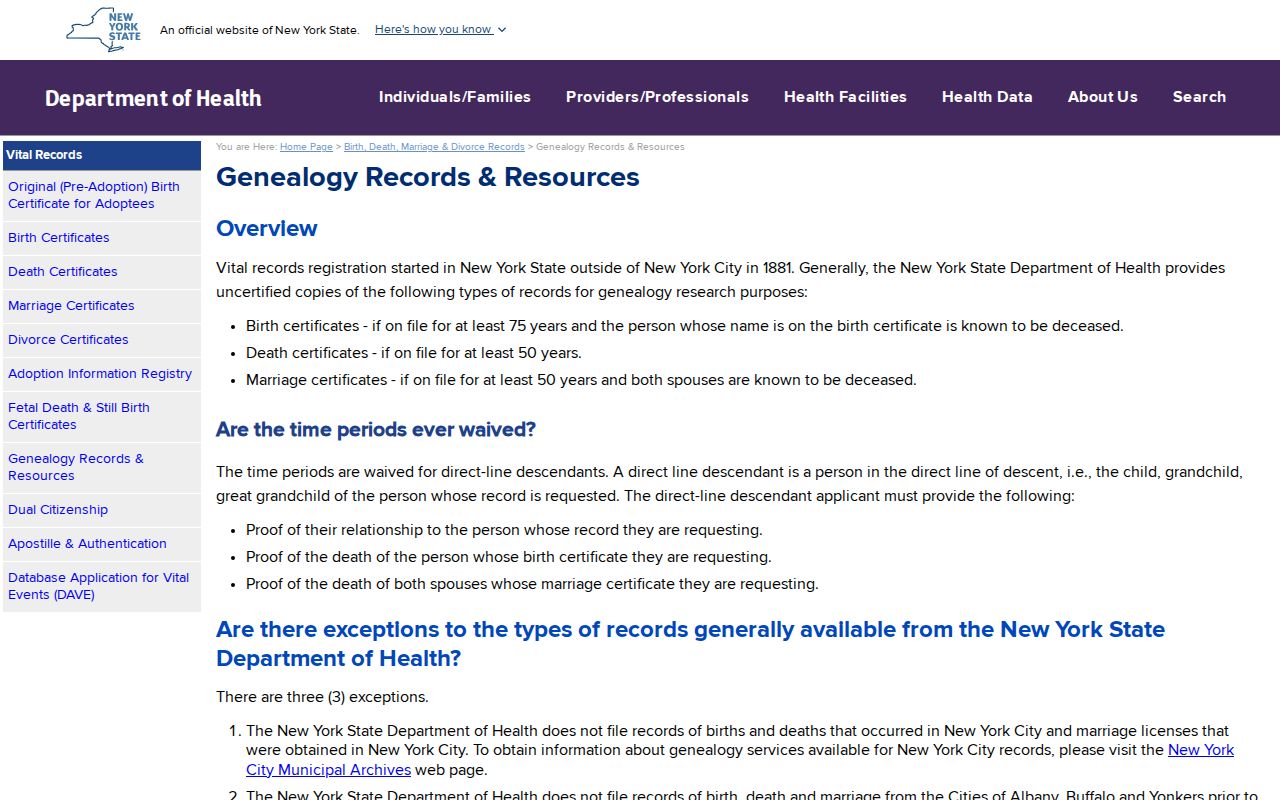
The state route also explains that genealogy copies are uncertified historical research material, not certified identity records. Match the event, timeframe, and requester eligibility before sending a request.
Keep Yonkers Resident Voter Checks Personal
The NYS Voter Lookup is a self-service tool for a registered voter to check registration, poll site, or mail-ballot status. Its known inputs are county, last name, first name, date of birth, and ZIP Code, and it requires cookies and JavaScript. It is not a public street roster or a way to browse other people. Broader state registration data carry an Election Law section 3-103(5) election-purpose restriction, and a specific request plus purpose statement is required through the official elections route.
That individual self-service route shows why a specific-person check and a broad resident listing are different tasks.
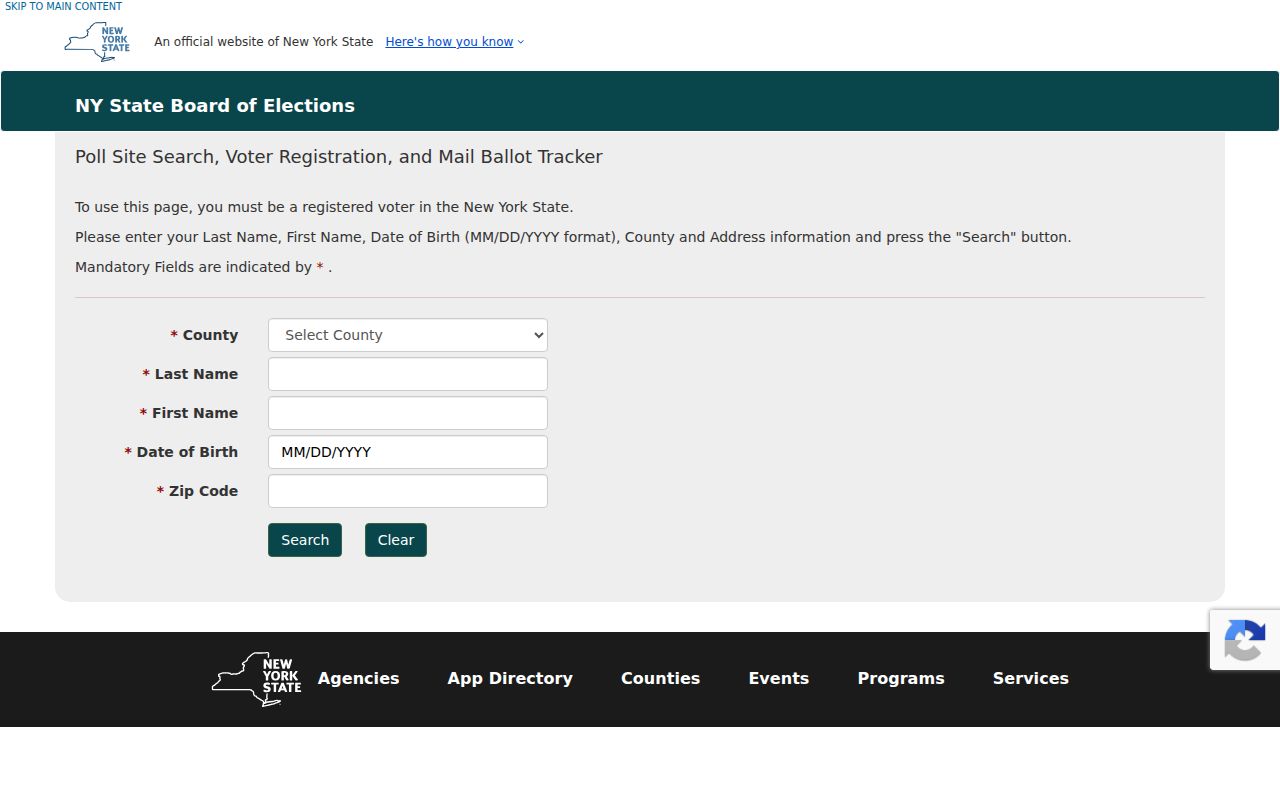
Qualifying people may also have confidential voter status, which segregates the record from ordinary public inspection and copying for four years unless renewed. An absent result must never be used to infer that a person does not live in Yonkers.
Verify Yonkers Resident Credentials Carefully
When the question is whether a named person holds a credential, use the NYSED Office of the Professions verification service. Select one profession, then search by a surname of at least three letters in the site's `Last First` format, or by a padded six-digit license number. Returned information can include name, city and state, profession, license or registration number, original license date, status, registered-through information, and discipline summaries dating from January 1994.
That service is a credential check, not a home-address source. Its terms prohibit commercial republication and aggregation except for verification. Likewise, the Department of State entity database can show a statutory or service address for an organization, but that does not establish that an officer or agent lives there.
Use a Yonkers Name-Record Request Carefully
For a city agency record that is actually subject to the New York Freedom of Information Law, make a narrow written request to the department that maintains it. Yonkers accepts written requests by hand delivery, mail, or email and asks for requester contact information, a detailed record description, and a delivery or format choice. Under Public Officers Law article 6, an agency must respond within five business days by providing the record, denying it in writing, or acknowledging receipt with an estimated determination date.
FOIL does not govern court files, and it cannot overcome confidential vital records, sealed material, protected voter data, or an Address Confidentiality Program address. Use the court clerk for court access and the designated vital-record process for certificates or genealogy copies. For paper copies up to 9 by 14 inches, the state baseline permits no more than 25 cents per page unless another statute sets a fee.
Note: Save the confirmation or acknowledgment because it anchors the statutory response and appeal timeline.
Yonkers Resident Privacy Rules for Name Searches
New York's Address Confidentiality Program provides qualifying participants with a substitute address and mail forwarding. State and local agencies generally must use that substitute address in public records unless the Department of State grants a written waiver under the program's rules. Sealed court files, youth and family matters, certified vital records, and confidential voter records have separate limits. Those limits are part of the record system, not an obstacle to work around.
When a public record appears wrong, contact the custodian that created it. The Yonkers Assessor handles parcel information, the County Clerk handles recording or index questions, a court clerk handles docket access, and the City Clerk or NYSDOH handles vital-record eligibility and amendment procedures. Preserve source dates, screenshots, and record numbers, then seek a correction at the source.
Lawful use. Use official records for personal, lawful research only. Do not use a Yonkers name search to stalk, harass, threaten, impersonate, or expose a protected person.