
Yonkers City Directory Holdings
Yonkers Public Library's Riverfront Local History Room is the central shelf for a historical city directory search. Its reference material covers local books, maps, yearbooks, clippings, microfilmed newspapers, and directories. The books and film stay onsite and do not circulate. Riverfront also says that its holdings have chronological gaps and that it has no vital records, so an entry is a dated historical lead, not a certificate or a complete resident record.
| Collection | Years | Where Held | Access |
|---|---|---|---|
| Bound Yonkers city directories | 1858, 1866, 1904-20, 1922, 1924-31, 1936, 1939 | YPL Riverfront Local History Room | Onsite reference |
| Microfilm directory run | 1860-61; 1877-78; 1881-82; a broken run through 1939 | YPL Riverfront | Onsite microfilm |
| Reverse-address directories | 1895-1900 and 1900-03 | YPL Riverfront | Onsite reference |
| Criss-cross directories | 1931, 1936, 1939 | YPL Riverfront | Onsite reference |
| Additional state-library run | 1859-60 on fiche; 1902-31 on film | New York State Library | Onsite collection |
These dates describe what the collections report, not a promise that each intervening year survives. The local catalog does not identify a publisher for the Yonkers runs, so the volumes should be cited by their stated edition rather than supplied with an assumed publisher name.
Yonkers City Directory Gaps
The odd sequence is useful evidence in itself. Bound examples begin with 1858 and 1866, while microfilm begins at 1860-61, then jumps to 1877-78 and 1881-82 before the later imperfect run. A missing name in a gap year cannot establish that someone left Yonkers. It may simply mean that no local volume for that year is available.
YPL's city-directory inventory is the first place to confirm the exact edition before planning a visit. For a missing interval, pair the closest available directory with a dated newspaper, a map, a deed, or another independent source. The 2025 library material reports continuing archival work and a proposed city-directory digitization effort, but it does not say that all directories are online.
A printed or filmed city directory is therefore a historical publication, not a seamless database. Keeping its date visible prevents a useful clue from becoming an unsupported present-day claim.
Riverfront Access to Yonkers Directories
Riverfront's Local History Room is a controlled, onsite reference room. It is on the library's third floor, is not freely accessible, and requires researchers to arrange an appointment through localhistory@ypl.org or 914-375-7966. Staff contact is especially valuable when a search depends on a particular year, a microfilm box, or a reverse-address volume.
The Local History and Genealogy collection also makes onsite Ancestry Library Edition, FamilySearch Affiliate Library access, and HeritageQuest available subject to their onsite rules. Those services can help test a dated directory clue, but they do not turn the Riverfront shelf into a remote city directory.
YPL's local-history room shows the practical division in Yonkers research: an old address may start at a library reference desk, while a formal land transfer belongs with the County Clerk in White Plains.
Riverfront's local-history information explains the appointment-based collection shown here.
Use the room's collection description to frame an onsite request around a date, name spelling, or street, rather than expecting an unrestricted digital search.
Reading a Yonkers City Directory Entry
A directory entry should be transcribed exactly as printed. The available research verifies that the Yonkers collection includes alphabetical, reverse-address, and criss-cross formats, but it does not verify a single fixed set of abbreviations or owner marks across all editions. Record the name spelling, stated address, year, and page, then check the front matter for that volume's abbreviation key.
| Name form | Copy the spelling, initials, and surname as printed, including variants. |
|---|---|
| Address | Keep the street number and street spelling with the edition year. |
| Listing type | Note whether the result came from an alphabetical, reverse-address, or criss-cross section. |
| Page reference | Preserve the page or image reference so another reader can inspect the same entry. |
| Context clue | Use any stated occupation or institutional wording as a clue to test in another dated source, not as identity proof. |
- Criss-cross directory
- An address-oriented directory arranged to move from a street location toward listed names for the editions that include it.
- Householder index
- An index centered on a named household or listing, which may not identify every person at the address.
- Abbreviation key
- The volume's own explanation of shorthand. Photograph or transcribe it with the entry because conventions can vary by edition.
A city directory entry is best labeled as a primary historical source. It can establish that a publication printed a dated association; it does not settle whether two similar names identify the same person. Preserve uncertainty whenever the edition supplies only initials, an abbreviated address, or another limited form of identification.
Yonkers Reverse Address Directories
Reverse-address material changes the research question. An alphabetical volume begins with a person or business name. Riverfront's documented reverse-address runs for 1895-1900 and 1900-03 begin with the address instead. Its criss-cross editions for 1931, 1936, and 1939 provide later address-oriented opportunities. These are unusually specific local resources, but they only support the years on their labels.
The city-directory holdings page is the source for those exact runs.
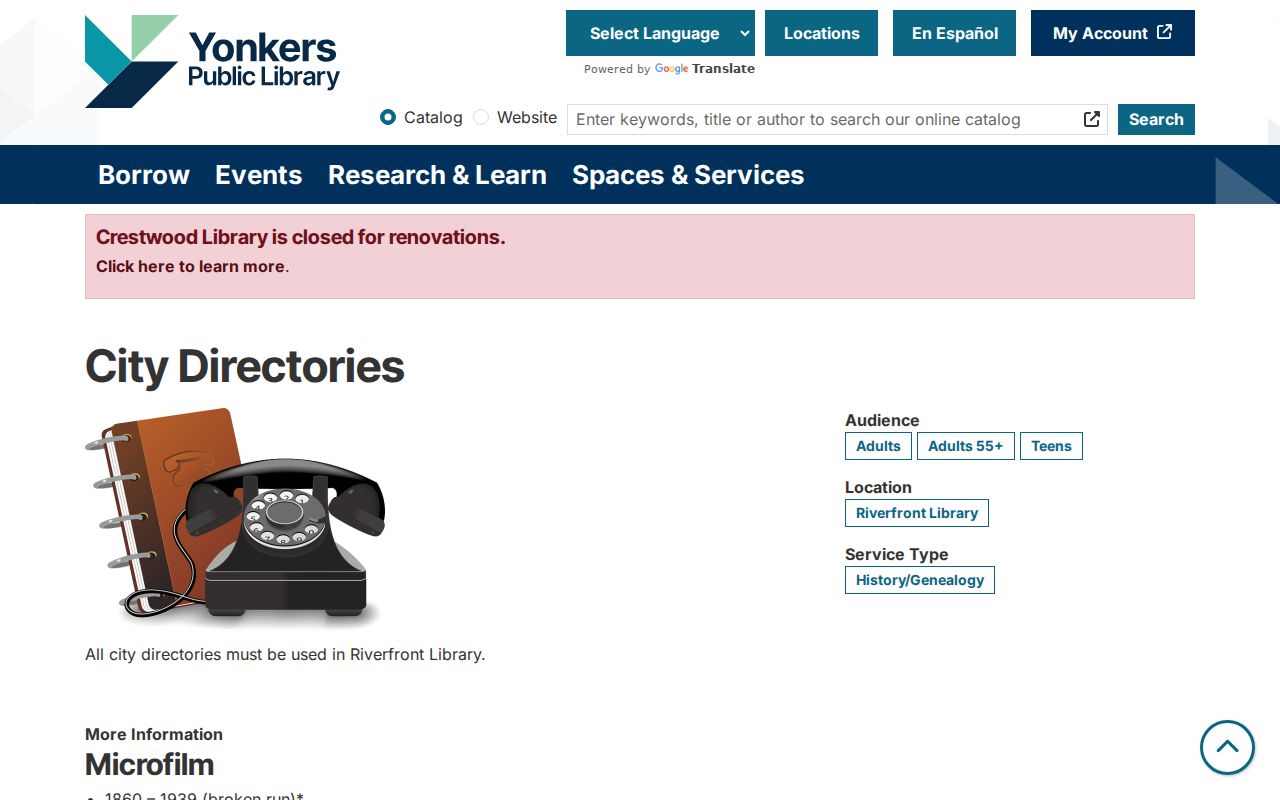
For an old address, choose the reverse or criss-cross volume only when the target date fits the documented edition. For a current parcel question, use the address-record route rather than stretching a historical listing beyond its date.
Citing a Yonkers Directory Finding
Evidence notes make a city directory useful later. Record the volume year, the collection name, the page or image, the name exactly as printed, the address, and the format used. Add the date the item was consulted if working from a digitized image or a catalog record. These details make it possible to distinguish an alphabetical listing from an address finding and to revisit a spelling decision.
A short citation also records the collection's access limit. “YPL Riverfront, Yonkers directory, [year], [page], consulted onsite” keeps the publication, shelf, and date together. For a newspaper or map check, add that source separately rather than blending several records into one undated assertion.
Yonkers records are spread among city, county, state, library, and archive custodians. A precise citation avoids merging their roles. A Riverfront entry is historical publication evidence, while a recorded deed is held through the Westchester County Clerk system and an estate lead may be an Archives finding aid.
Tracing Families in Yonkers Directories
Work from one edition at a time. A household trail becomes more reliable when the address, spelling, and date move together across independent records. The library's newspapers and maps are companions, not replacements, because a printed listing can be incomplete or a name can appear in more than one form.
- Locate the earliest available directory entry for the known name or address.
- Copy its year, page, spelling, and listing format before moving to a later edition.
- Follow each later available year and note any address or name-form change.
- Use a reverse or criss-cross edition only when the target year is one Riverfront holds.
- Pair a dated directory clue with the relevant census, newspaper, map, deed, or probate source.
If a name disappears, record the gap rather than supplying a reason. A move, a death, a changed listing practice, an alternate spelling, or a missing edition can produce the same result. A modern record check belongs with the Yonkers resident lookup workflow, not in a historical directory alone.
Yonkers Directories and Newspapers
Riverfront's newspaper holdings give a second date layer after a directory entry. The collection reports Yonkers Examiner for 1857-1863, Statesman for 1863-1932, Gazette for 1868-1893, Daily Record for 1883, Herald for 1891-1932, and Herald Statesman for 1932-1998. It also reports 1.23 million pages, a digitized subset of Examiner and Gazette pages, and a digitized Yonkers Home News run from June 17, 1941 through January 29, 1946.
Search newspapers with a date, place, or event attached to the directory clue. An OCR miss does not prove a person was absent. The same caution applies to a positive result: it needs a matching period, address, and identity context before it supports a family-history conclusion.
Yonkers Directory Context at Archives
The Westchester County Archives adds maps, older deeds, naturalization material, and estate-related discovery routes to a directory trail. Its holdings concern a different custodian and record type than YPL's printed directories. That separation is helpful when a directory date points toward a property transfer or an estate reference.
The County Archives reading-room information describes the archival access route.
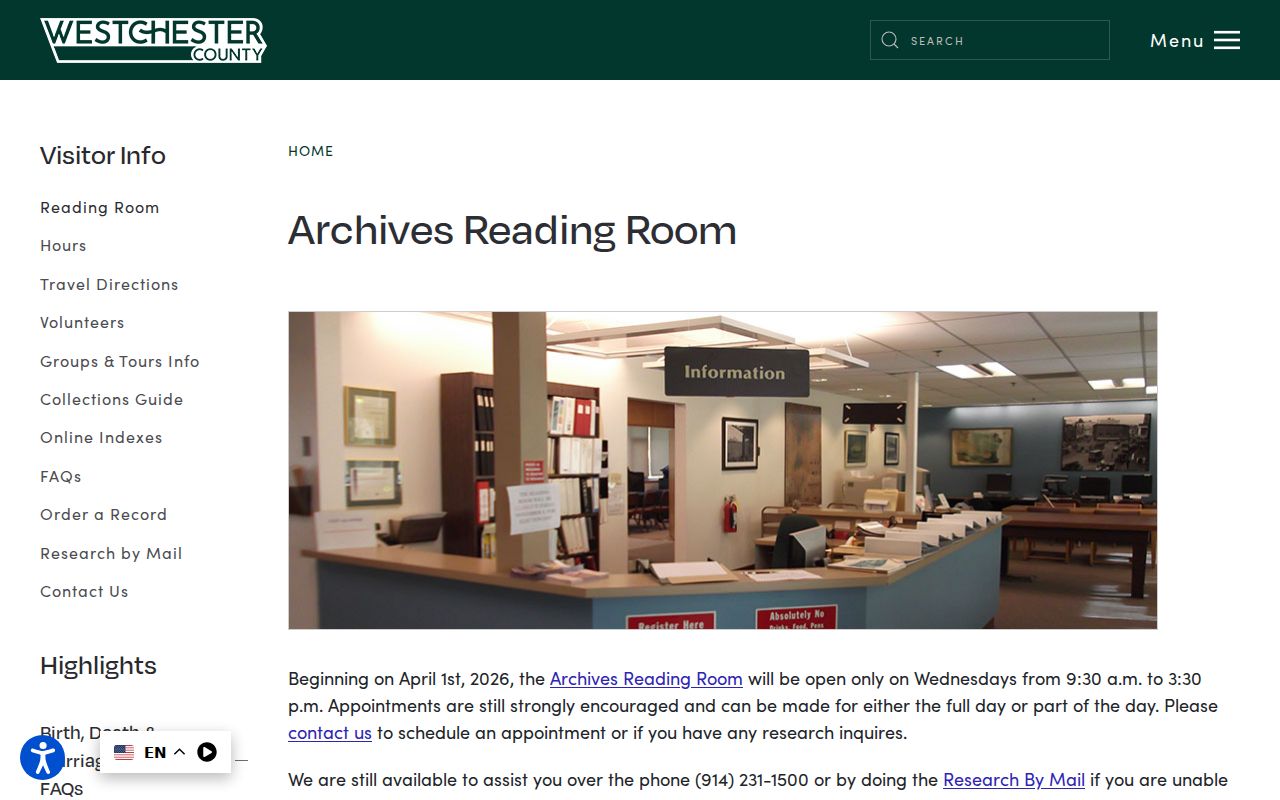
Ask the Archives about the identified series and access procedure. A finding aid or catalog entry establishes a lead, not automatic remote availability of every original document.
Limits of Yonkers City Directories
City directories are historical clues, not identity proof. A directory can omit people, publish an old address, use an abbreviation, or list two people with similar names. The absence of an entry may reflect a gap in the surviving volume, a changed convention, or incomplete coverage. Keep the edition date and source type visible in every note.
For personal research, compare one directory finding with an independent source that fits the same period and place. Respect sealed, confidential, and protected-address limits. Historical research should never be used to track, pressure, or harass a living person.